ARM has had decades in the oven, x86 has had almost half a century, while RISC-V manufacturing and ISA development has been generally available only a couple of years.
The fact is if there isn’t a big push by some major vendor - or some nation state, then chances are it’ll develop slower than the previously mentioned ISAs.
From design, to testing, to prefab, to packaging, it’s all combined just a single step of the journey to improving yield and performance.
ARM is unfortunately the current trajectory, with Qualcomm, Apple and now NVIDIA leading the charge - which doesn’t bode well, simply because you won’t know what the hell the firmware do.
We could truly use some market disruption in this space and RISC-V, being an open ISA, would be the safest bet for digital sovereignty and user autonomy - but apparently those things are only important on paper.
Can we make our own RISC-V chips like using FPGAs or something? Or would that be infinitely less robust than anything purpose-built by industry?
Chinese manufacturers seem to offer plenty of options for RISC-V MCUs and raspberrypi knockoffs, but they seem to be always sold out or they don’t ship to my country
The ESP32 series have already switched to RISC-V for most models and many other microcontrollers has too. There’s not a lot in the laptop/desktop territory but with enough incentives it’s gonna happen
Oh ya, the C3 and I think the C5. Not sure what the current versions are but if they’re in esp32’s then I guess that’s pretty main stream, just nowhere near a computer processor just yet.
Are the RISC-V ESP32’s cheaper than that ARM ones?
Maybe if we all buy RISC-V microprocessors then somebody somewhere will see a little blip in market demand and have the genius idea of producing more full 64-bit RISC-V chips
I see. They’re a little cheaper if you solder them yourself though. Of course soldering 128 leads is no small project and requires some precision. But it’s way cheaper than buying pre-soldered breakout boards.


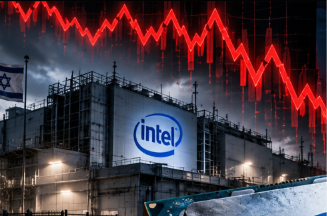
This is generally the problem with ISAs.
ARM has had decades in the oven, x86 has had almost half a century, while RISC-V manufacturing and ISA development has been generally available only a couple of years.
The fact is if there isn’t a big push by some major vendor - or some nation state, then chances are it’ll develop slower than the previously mentioned ISAs.
From design, to testing, to prefab, to packaging, it’s all combined just a single step of the journey to improving yield and performance.
ARM is unfortunately the current trajectory, with Qualcomm, Apple and now NVIDIA leading the charge - which doesn’t bode well, simply because you won’t know what the hell the firmware do.
We could truly use some market disruption in this space and RISC-V, being an open ISA, would be the safest bet for digital sovereignty and user autonomy - but apparently those things are only important on paper.
Can we make our own RISC-V chips like using FPGAs or something? Or would that be infinitely less robust than anything purpose-built by industry?
Chinese manufacturers seem to offer plenty of options for RISC-V MCUs and raspberrypi knockoffs, but they seem to be always sold out or they don’t ship to my country
The ESP32 series have already switched to RISC-V for most models and many other microcontrollers has too. There’s not a lot in the laptop/desktop territory but with enough incentives it’s gonna happen
Oh ya, the C3 and I think the C5. Not sure what the current versions are but if they’re in esp32’s then I guess that’s pretty main stream, just nowhere near a computer processor just yet.
Are the RISC-V ESP32’s cheaper than that ARM ones?
Maybe if we all buy RISC-V microprocessors then somebody somewhere will see a little blip in market demand and have the genius idea of producing more full 64-bit RISC-V chips
You could always make your own chips
Ohh, I’m saving that one! Thanks
FPGAs are going to be way more expensive. It’s possible, but the cost-to-performance ratio would be abysmal.
I see. They’re a little cheaper if you solder them yourself though. Of course soldering 128 leads is no small project and requires some precision. But it’s way cheaper than buying pre-soldered breakout boards.