

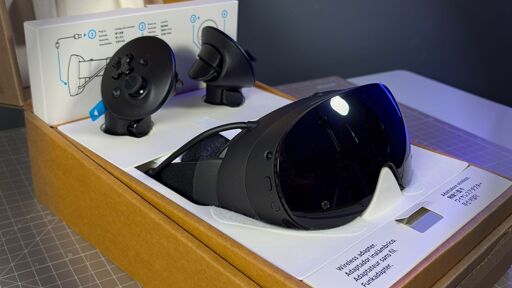
t’s certainly been a journey for Valve. A week prior to the Steam Frame’s launch, we spoke with two engineers at Valve about the project: Joy Lyons, hardware engineer, and Jeremy Selan, software engineer. The memory crisis and the price were a big part of that conversation. From that chat, we can confirm that Valve had aimed for a lower price point than the one it’s launching the Frame for today.
Here’s Lyons on the memory crisis:
“We set out to design this hardware with one particular price in mind, but we’ve made choices to make sure that we’re making a product that is choiceful, that people can purchase, they can upgrade with different features later. But we wanted to make sure we had a base product with really great performance. Then that price target shifted due to the ongoing RAM crisis around the world.”
Lyons also said that forecasting for the cost of certain components used in the Steam Frame is an ongoing challenge.
Not exactly boding well of the Steam Deck 2.
Yes and also yes. What???
Your phone runs mainline Linux? You dont need to download a closed source binary blob from the vendor?
Does your phone show up on this list?
https://wiki.postmarketos.org/wiki/Devices
Notice how I dont have to ask this question if somebody owns a normal x86 computer.
Troll harder bud.
Yes, you do have to ask that question, dummy.
Just look at every single newer generation x86 CPU. Until direct support is added in the kernel (which usually happens early on because Intel and AMD use a singular architecture for each generation so support is easy), shit’s so broken it won’t even boot.
Except, you know, the CPU microcode package, the GPU drivers, the WiFi, Bluetooth, etc. firmware (via the linux-firmware package), and the list goes on.
Buddy, we’ve already established that your knowledge of Linux et al is surface level at best, why are you still digging your own grave with verificably incorrect/incomplete statements that literally move the goalposts of this debate every time you reply?