

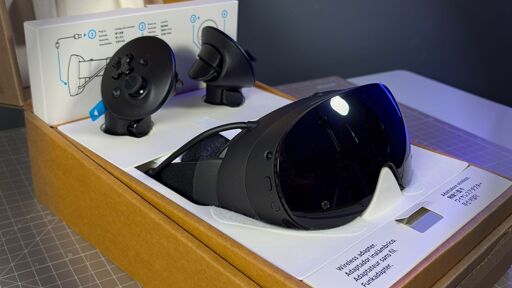
t’s certainly been a journey for Valve. A week prior to the Steam Frame’s launch, we spoke with two engineers at Valve about the project: Joy Lyons, hardware engineer, and Jeremy Selan, software engineer. The memory crisis and the price were a big part of that conversation. From that chat, we can confirm that Valve had aimed for a lower price point than the one it’s launching the Frame for today.
Here’s Lyons on the memory crisis:
“We set out to design this hardware with one particular price in mind, but we’ve made choices to make sure that we’re making a product that is choiceful, that people can purchase, they can upgrade with different features later. But we wanted to make sure we had a base product with really great performance. Then that price target shifted due to the ongoing RAM crisis around the world.”
Lyons also said that forecasting for the cost of certain components used in the Steam Frame is an ongoing challenge.
Not exactly boding well of the Steam Deck 2.
Chance is higher that Steam DECK 2 will be ARM/Snapdragon. So far nobody seems to capitalize on the fact that x64 ran out of patent protection this year.
Maybe we’ll finally see some more competitors appear in that space and drive competition
The rumors seem to say it will be another AMD chip.
At the moment, there is no ARM SoC that is as efficient at idle as Intel’s Panther Lake, so I dont know why Valve would tie themselves down with Qualcomm and have bad Linux support and shitty BIOS.
It’s hard to look at the new Intel Panther Lake processors and see that the advantages of ARM outweigh the disadvantages. Look at the new Intel handhelds, they just operate on a whole new level of efficiency.
I have yet to be aware of any Intel Arc G3 handheld that manages to come down to the 540g in weight of a Switch 2 console. The Acer Atlas 7 has a smaller screen and yet weighs a bit under 700g, so 150g more while it has a smaller screen.
No but they’re also far more powerful than a Switch.