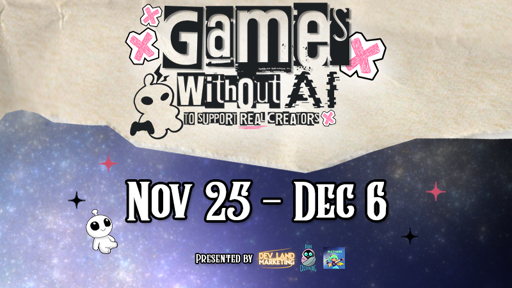
A celebration of studios that put people at the heart of game development, honoring their teams' skills, shared passion, and the creative and technical artistry of video games.
Every big game prior to steam had drm. It was already popular and normalized by the time steam was established. Correlation does not equal causation, I could just as easily claim that as more profit was mined from the gaming industry so to did the methods employed to protect it. And yeah we get it dude, we’re all sheep and shills and you’re the super special main character who can see the truth.
Interesting. However, that is directly counter to what really happened before 2003.
This isn’t a “main character” thing. Again, if you’ve forgotten the ACTUAL events of the past due to history washing or were too young, that is a totally valid excuse to not know.
Thanks. You actually proved my point without realizing it.
The late 1990s and early 2000s saw a significant shift in the way games were distributed and played.
Then in the section for the 2000s.
As the use of CD keys and online activation became more widespread, two companies emerged as major players in the DRM market: SecuROM and StarForce.
That directly supports what I have said in previous statements throughout this thread about the growing popularity. That didn’t happen over night.
Then the next section
The rise of online gaming and digital distribution platforms like Steam and Origin led to the adoption of online-only DRM.
This tells me you didn’t read what you linked and though it was some sort of “gotcha” that would prove a point. Unfortunately, you just didn’t realize it was mine.
The late 2000s and early 2010s saw a significant shift in the way games were distributed and played. The rise of online gaming and digital distribution platforms like Steam and Origin led to the adoption of online-only DRM. Games required a constant internet connection to be played, even in single-player mode. This approach was criticized for being overly restrictive and punishing legitimate players who experienced internet connectivity issues.
Digital distribution platforms like Steam and Origin revolutionized the way games were distributed and played. They allowed players to purchase and download games directly to their computers, without the need for physical media. However, these platforms also introduced a new form of DRM: online-only DRM.
Online-only DRM required players to have a constant internet connection to play games, even in single-player mode. This meant that players who experienced internet connectivity issues, such as slow speeds or dropped connections, were unable to play their games.


Every big game prior to steam had drm. It was already popular and normalized by the time steam was established. Correlation does not equal causation, I could just as easily claim that as more profit was mined from the gaming industry so to did the methods employed to protect it. And yeah we get it dude, we’re all sheep and shills and you’re the super special main character who can see the truth.
Interesting. However, that is directly counter to what really happened before 2003.
This isn’t a “main character” thing. Again, if you’ve forgotten the ACTUAL events of the past due to history washing or were too young, that is a totally valid excuse to not know.
Imagine thinking you’re an expert in something just because you were alive when it occurred.
Thanks. You actually proved my point without realizing it.
Then in the section for the 2000s.
That directly supports what I have said in previous statements throughout this thread about the growing popularity. That didn’t happen over night.
Then the next section
This tells me you didn’t read what you linked and though it was some sort of “gotcha” that would prove a point. Unfortunately, you just didn’t realize it was mine.