I don’t know if you are dense or so, I’m talking about characters and a likeness of person. Do I speak Chinese? I explicitly said I am not talking about code. At this point I think you are just trolling.
Yes, and I was referring to that you can infringe an IP (that is not code!) if its not even the same character, but if it looks similar enough that you could confuse it for. That is NOT the case with code, where similar looking code cannot be an infringement. That’s why I explained the difference, because they are handled differently.
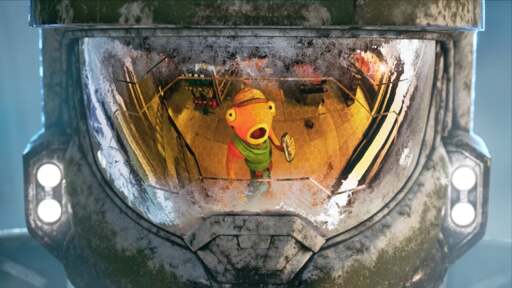
Going back to the Master Chief thing we talked. Hopefully you understand now.
You conflict two different things. No, clean room implementation has nothing to do with it. You can look at code, have a similar code to it and it wouldn’t be copy right infringement. Clean room implantation is about not seeing and knowing the internals of the source code.
Both source code and machine code are treated the same as literary works in the US. With machine code only having an deviation from this in that it is assumed unintelligible for people to understand on its own.
Whelan Assocs. v. Jaslow Dental Lab. (3d Cir. 1986) — extended protection beyond literal code to a program’s "structure, sequence and organization
And Computer Associates Int’l v. Altai (2d Cir. 1992) only over rules that with assumption of clean room building, where one person studies the code, writes a spec stripped of those elements, patented ideas, and other assets, then gives that to someone who can reasonably say they that they’re implementation of the spec won’t be based on those copy written elements
AI produced code is unsettled but I was expressing my opinion on the hypocracy
If that was true, then you could sue any company that has similar code. But as far as I know, this never happened in the history of copyright and code. Source code is not treated the same as the likeness of characters.
Both Whelan v. Jaslow (3d Cir. 1986) and Whelan v. Jaslow (3d Cir. 1986) are cases of this. The most obvious reason its not more common is because discoverabilty is much rarer.
It’s not like my source code is going to be released to box office numbers and increasingly more code is opensource to avoid the hassle of IP in a sort of public contract that it remain opensource (as defined and regulated enforced by its copyright license!).


Code is also IP
I don’t know if you are dense or so, I’m talking about characters and a likeness of person. Do I speak Chinese? I explicitly said I am not talking about code. At this point I think you are just trolling.
Yes code is also copy written IP. Just a characters likeness can be from a movie or game.
Yes, and I was referring to that you can infringe an IP (that is not code!) if its not even the same character, but if it looks similar enough that you could confuse it for. That is NOT the case with code, where similar looking code cannot be an infringement. That’s why I explained the difference, because they are handled differently.
Going back to the Master Chief thing we talked. Hopefully you understand now.
Similar looking code can be copy right infringement for sure. Its why you have “clean room” implementations to prevent that case in court.
You conflict two different things. No, clean room implementation has nothing to do with it. You can look at code, have a similar code to it and it wouldn’t be copy right infringement. Clean room implantation is about not seeing and knowing the internals of the source code.
Both source code and machine code are treated the same as literary works in the US. With machine code only having an deviation from this in that it is assumed unintelligible for people to understand on its own.
Whelan Assocs. v. Jaslow Dental Lab. (3d Cir. 1986) — extended protection beyond literal code to a program’s "structure, sequence and organization
And Computer Associates Int’l v. Altai (2d Cir. 1992) only over rules that with assumption of clean room building, where one person studies the code, writes a spec stripped of those elements, patented ideas, and other assets, then gives that to someone who can reasonably say they that they’re implementation of the spec won’t be based on those copy written elements
AI produced code is unsettled but I was expressing my opinion on the hypocracy
If that was true, then you could sue any company that has similar code. But as far as I know, this never happened in the history of copyright and code. Source code is not treated the same as the likeness of characters.
Both Whelan v. Jaslow (3d Cir. 1986) and Whelan v. Jaslow (3d Cir. 1986) are cases of this. The most obvious reason its not more common is because discoverabilty is much rarer.
It’s not like my source code is going to be released to box office numbers and increasingly more code is opensource to avoid the hassle of IP in a sort of public contract that it remain opensource (as defined and regulated enforced by its copyright license!).